
Every year, the Salon des Maires et des Collectivités Locales (SMCL) is a key event where elected officials, institutions, experts, and companies involved in regional transformation come together.
The 2025 edition was no exception. On the contrary, it confirmed that ecological transition, resource management, and the structuring of sustainable industrial sectors are now at the heart of local concerns.
Among the participants, Jean-Baptiste Sandoz, founder of Company Project and French Ambassador for the European Climate Pact, took part in several key events, illustrating the growing role of economic actors working alongside local authorities.
Sylvain Waserman's speech: territories on the front line
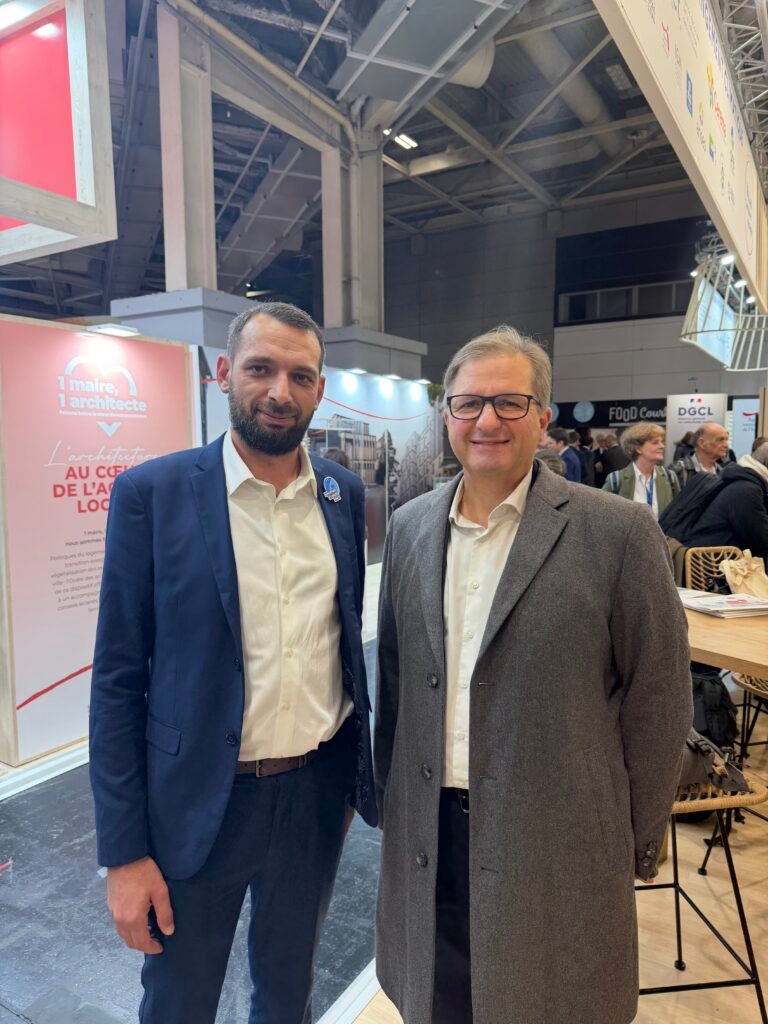
One of the highlights of the show was the speech given by Sylvain Waserman, president ofADEME, to more than 250 elected officials gathered to discuss the challenges of ecological transition.
His message resonated strongly:
the ecological transition is primarily driven by local communities, far from any notion of local disengagement.
He recalled in particular:
- the massive commitment of local authorities,
- the need for economically viable projects,
- the central role of ADEME's expertise,
- the importance of partnerships between elected officials, businesses, and citizens.
During a public discussion, Sylvain Waserman also emphasizedthe urgent need to address waste issues, particularly in constrained or isolated areas—an issue directly related to the work carried out by Company Project.
This issue is directly linked to the challenges of the circular economy, which consists of reducing waste volumes, securing raw materials, and transforming environmental constraints into industrial levers for regions.
Dominique Perben: political clarity and the circular economy
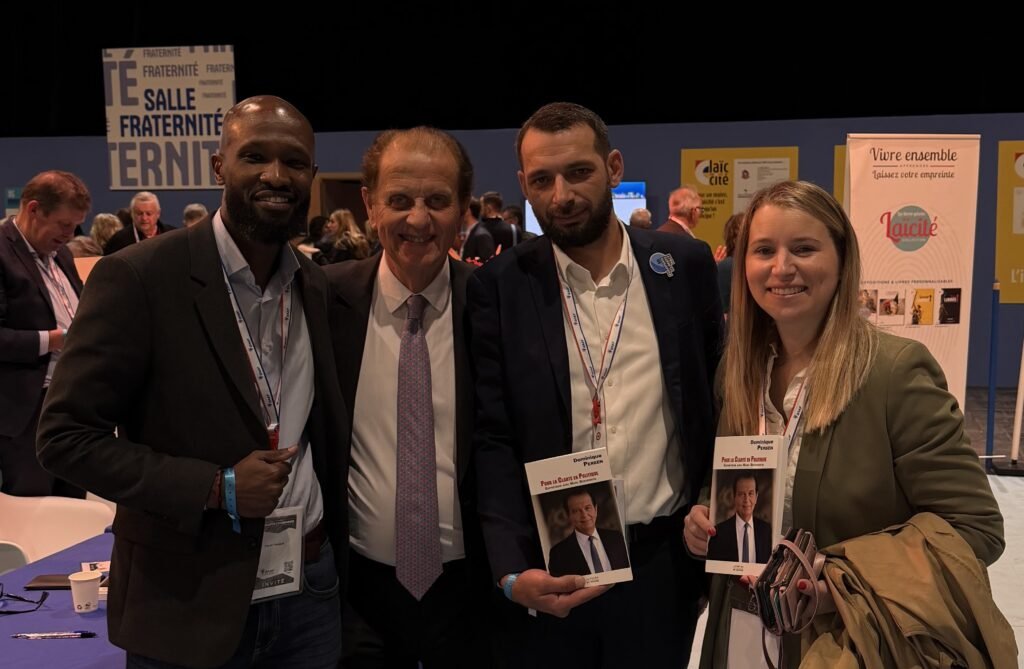
Another highlight of the fair was the book signing by Dominique Perben, former minister, renowned institutional figure, and administrator of Company Project, for his book Pour la clarté en politique.
Beyond the literary moment, this sequence gave rise to in-depth discussions with political and regional decision-makers on concrete solutions for plastic waste treatment.
These discussions highlighted:
- the need for a clear policy framework,
- the rise of the circular economy,
- the need for structured industrial sectors,
- the strategic role of companies capable of deploying operational solutions.
Waste management is now seen as a matter of territorial sovereignty, going far beyond the environmental dimension alone.
Communities, innovation, and ecological transformation
As the discussions progressed, a shared conclusion emerged:
without local authorities, no ecological transition can succeed.
The discussions highlighted:
- high expectations of elected officials towards industrial players,
- the need to industrialize waste management solutions,
- the importance of enhanced institutional coordination,
- the desire to reduce national and European dependence.
A trade show that shapes the mission of the Climate Pact
For the Ambassadors of the European Climate Pact, the SMCL is a privileged observatory of the realities on the ground.
The lessons learned from this edition enable us to identify:
- the specific needs of communities,
- the operational obstacles encountered,
- replicable solutions to be promoted at the European level.
The trade show confirms that the ecological transition must be conceived locally but supported at the European level, with stakeholders capable of transforming political guidelines into concrete industrial solutions.
For local authorities, thecircular economy now appears to be an operational response to budgetary, environmental, and industrial challenges, enabling the structuring of local and sustainable industries.
Conclusion
SMCL 2025 has confirmed a strong momentum: elected officials, institutions, and companies are now moving forward together, aware that ecological transition has become an economic, political, and territorial necessity.
By bringing together figures such as Sylvain Waserman and Dominique Perben, and placing waste management at the heart of the debate, the exhibition reaffirms the central role of local authorities in the country's ecological transformation.

0 comments