CASE STUDIES
WATER SAVING AND ECOLOGICAL CLEANING PROJECT WITH INDUSTRIAL PROJECT
Industrial Project has integrated innovative solutions to reduce water consumption in its cleaning services. By using eco-certified and enzymatic products, we are able to recycle part of our grey water and reintroduce collected rainwater into our cleaning processes.
%
Reduced water consumption in our cleaning operations.
%
reduction in water consumption thanks to our recycling systems.
waste electrical and electronic equipment (WEEE)
Extending product life: an economic and ecological revolution
Changing our relationship with products to transform the future
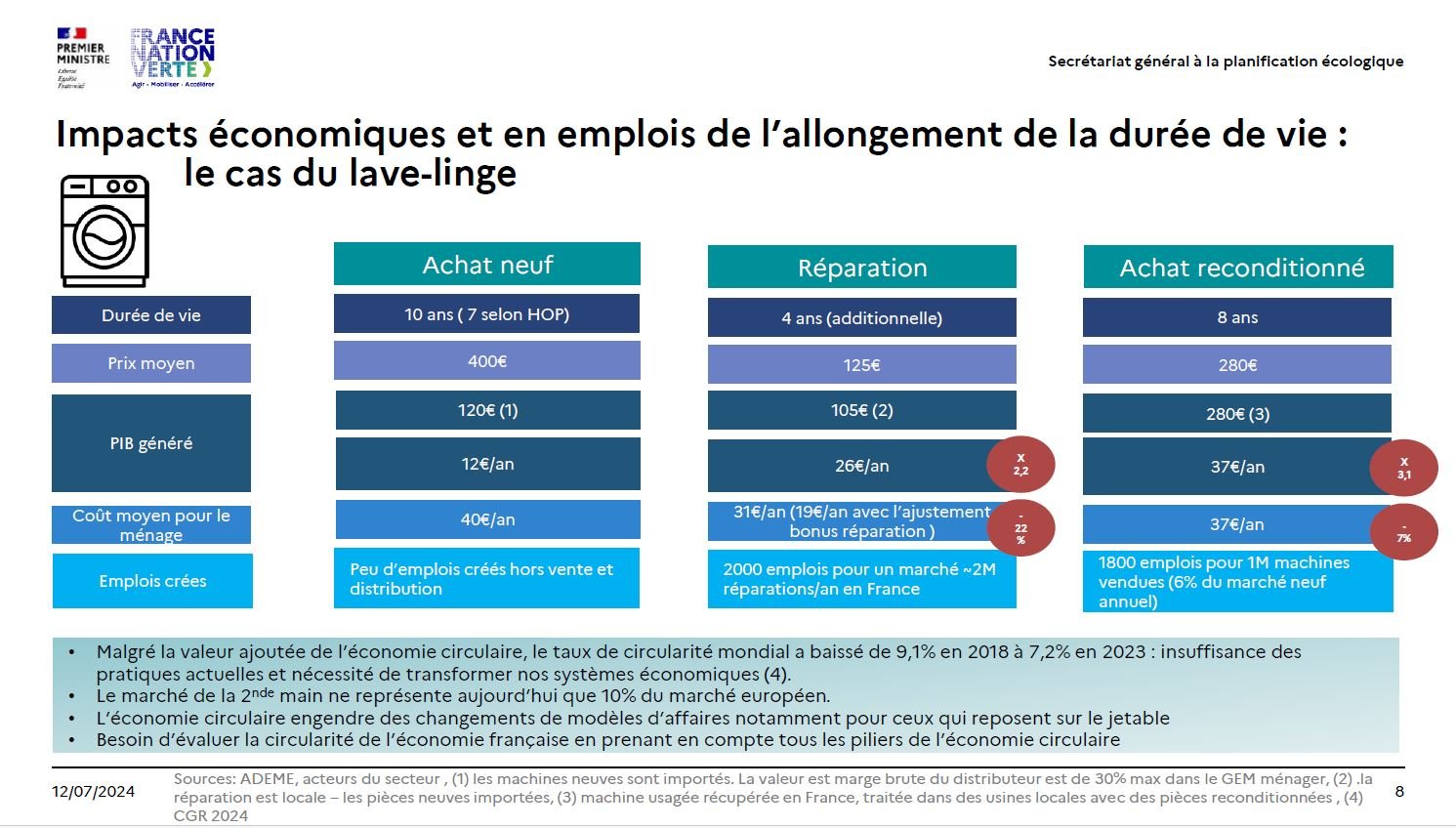
In a world of limited resources, the circular economy offers a powerful alternative to mass production and waste. ADEME's washing machine study is a powerful demonstration of how extending the life of equipment can reduce our carbon footprint, stimulate the local economy and lighten household budgets.
Figures that speak for themselves: Repairing and reconditioning have a triple impact
A major economic impact:
35% savings for households:
- Repairing costs €26/year, compared with €40/year for a new appliance.
- An affordable, sustainable alternative that restores purchasing power while reducing waste.
-
A reduced environmental footprint:
- 70% raw material savings: A reconditioned washing machine consumes 10.5 kg of materials, compared with 1,800 kg for a new one.
- Greenhouse gas emissions divided by three by choosing repair or reconditioning.
-
-
Boosting local employment :
- 2,000 jobs generated for 2 million repairs per year.
- 1,800 jobs for 1 million reconditioned machines.
- These sectors are becoming engines of sustainable growth.
Technical Project - Reuse and sustainable management of WEEE in Saint-Pierre-et-Miquelon
Turning WEEE into a sustainable resource
Reducing waste, enhancing resources
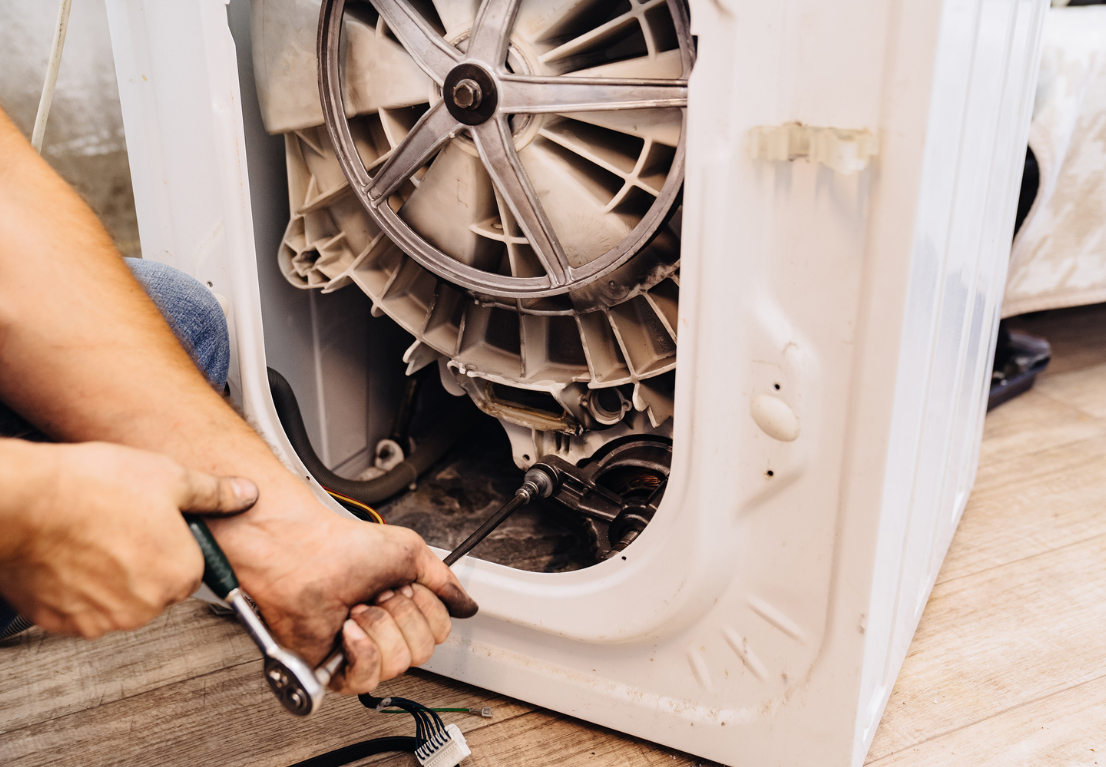
In Saint-Pierre-et-Miquelon, where infrastructure and resources are limited, Technical Project, a subsidiary of Company Project, plays a key role in the management of Waste Electrical and Electronic Equipment (WEEE). With an average of 100 tons of WEEE processed per year, Technical Project applies innovative solutions to transform this waste into resources, while supporting a local circular economy.
Thanks to our expertise and QualiRépar certification, we guarantee measurable results that reinforce our commitment to the environment and local communities.
Key results (June-December 2023)
Of the 18 tonnes of WEEE processed during this period, here is the breakdown of activities:
11.6 tonnes (60.7%) recycled: Transformation of equipment into secondary raw materials (SRM) used in industrial sectors.
3.2 tonnes (16.8%) repaired : Appliances reconditioned for prolonged use, reducing demand for new equipment.
1.5 tonnes (7.9%) spare parts recovered: Components recovered to repair other appliances or to be resold as functional parts.
2.8 tonnes (14.7%) scrapped: Non-reusable equipment, carefully sorted and sent to specialized recycling channels.
Impact on Saint-Pierre-et-Miquelon
Reducing waste at landfill sites: With 85% of equipment repaired or reconditioned, Technical Project significantly reduces the pressure on local waste management infrastructures.
Local circular economy: Reconditioning and parts recovery activities generate economic opportunities for local businesses while reducing imports of new equipment.
Training and employment: Skills enhancement programs are set up to support local technicians, promoting employment in the recycling and repair sectors.
Study on global plastic waste management
A global plastics crisis
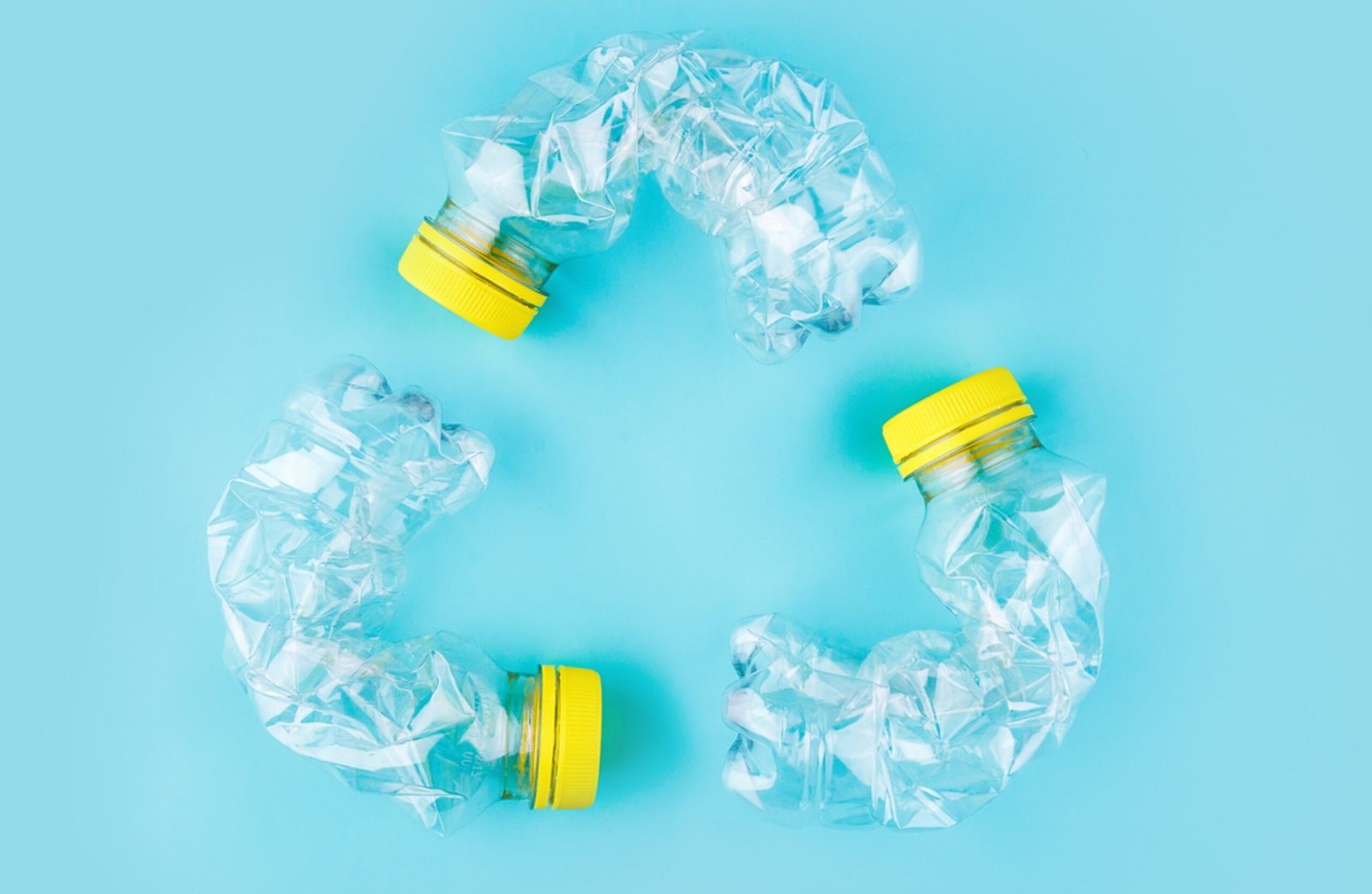
Plastics production has grown exponentially since the 1950s, reaching 460 million tonnes in 2019. This ubiquitous material in our daily lives is proving to be a major challenge for the environment due to its inadequate management, its accumulation in ecosystems, and its impacts on fauna, flora and humans. To date, only 9% of plastic waste is recycled, the rest being incinerated, buried or left in nature.
Worldwide breakdown of plastic waste
Recycled plastics: 9%.
The majority of recycled plastics are transformed into lower quality products or backfill material.
The limits of recycling include contamination, high costs, and the diversity of plastic types.
Plastics incinerated: 12%.
Although incineration reduces the volume of waste, it generates greenhouse gas emissions and toxic residues.
Incineration remains a controversial solution, acceptable only with advanced filtration technologies.
Plastics landfilled or abandoned: 79%.
Most plastic waste ends up in poorly managed landfills or in the natural environment.
Uncollected plastics accumulate in soils, rivers and oceans.
Plastics in the oceans: 8 million tonnes/year
Every year, the equivalent of one truckload of plastic per minute is dumped into the oceans, contributing to the formation of waste zones such as the "plastic continent" in the North Pacific.
This marine litter causes irreversible damage to marine fauna and the food chain.
Environmental and human impact
Pollution of ecosystems :
Land and soil: Microplastics contaminate soils, disrupting plant growth and threatening the quality of water resources.
Oceans: Plastics account for 80% of marine litter, endangering more than 700 marine species.
Impact on human health:
Microplastics in water, food and air have as yet poorly understood but worrying effects on human health.
The production and incineration of plastics generate toxic substances, increasing the risk of cancer, hormonal disorders and respiratory diseases.
Economic cost :
According to estimates, plastic pollution costs hundreds of billions of euros every year in terms of clean-up, loss of biodiversity, and damage to the maritime and tourism sectors.
Proposals for sustainable management
Reduce plastic production :
Ban or limit single-use plastics.
Encourage the use of biodegradable or reusable materials.
Improve collection and recycling:
Develop modern sorting and recycling infrastructures.
Provide economic incentives to encourage recycling.
Strengthen regulations:
Introduce global policies to limit non-recyclable plastics.
Encourage businesses to adopt models based on the circular economy.
Awareness-raising and education:
Inform citizens about the importance of reducing their plastic consumption.
Integrate educational programs on the impacts of plastic in schools.
Key figures to raise awareness:
70% of marine plastics come from poorly managed waste.
20% of waste-related CO2 emissions come from plastic incineration.
By 2050, there could be more plastic than fish in the oceans, if current trends continue.
Immediate action is needed:
The impact of plastics on the environment and health is alarming. Although initiatives are emerging, such as efforts to limit single-use plastics or develop biodegradable alternatives, more global and coordinated action is needed. The future of our planet depends on our ability to reduce, reuse and recycle.